All releases uploaded on the CiDAR Africa platform automatically falls under our standard distribution license from the moment of upload. For more details, please see our contract form page and contract terms.


.png)


GLOBAL MUSIC TRADITIONS: Episode 5
Music in Senegal

THE PEOPLE
Senegal is known for a lot of interesting things.
Their beautiful and graceful women, their distinct fashion, from their boubous to their kaftans and ever-flowing jewellery stacks of brass and gold – they are ones to remember. With their lush ebony, shining always, giving you a run for your money .
And of course, we can’t forget their famous contribution to the origin of Jolof, which came from the Wolof tribe during the 14th-16th century. As we know, the Jollof wars never end; some (mostly them) argue that as the originators, they are first in line to be the best, but that’s a debate for another day (let me bend if Nigerians leave that title alone for anybody).
The name 'Senegal' also comes from the Wolof tribe, from their phrase ‘Sunuu Gaal’, which translates as ‘Our Boat’. They are a nation of fishermen and a gentle, welcoming people
They house over 20 ethnic groups and are one of the few African countries that have never suffered a coup d'etat. Peacemakers, right? Well their favourite sport is also called Laamb, a form of wrestling. So peaceful unless crossed. Move wisely.
Still, they’re definitely some of the most hospitable people ever and they don a particular culture called Teranga, which preaches generosity and making strangers feel like family. It’s more than just being welcoming, they go out of their way to create a sense of belonging for others, sharing their food, their space and their stories with a deep sense of community and embrace.
THE MUSIC
“It is hard to avoid the existence of Music in Senegal. The music scene in Dakar is one of the most exciting and lively music scenes in all of Africa.” - Lucien DeLaBruere
Traditional Senegalese music is one of West Africa’s most vibrant legacies, a living archive of history, spirituality, and identity. Its roots run deeper than entertainment — they are woven into the social fabric of Senegal, carried for centuries
Its influence can be found in the existence of different ethnic groups and Griots. Griots (known as gëwël among the Wolof and 'jali' among the Mandinka) are folks-people, traditional West African storytellers, musicians, oral historians, and praise singers who preserve and pass down the history and culture of their communities.
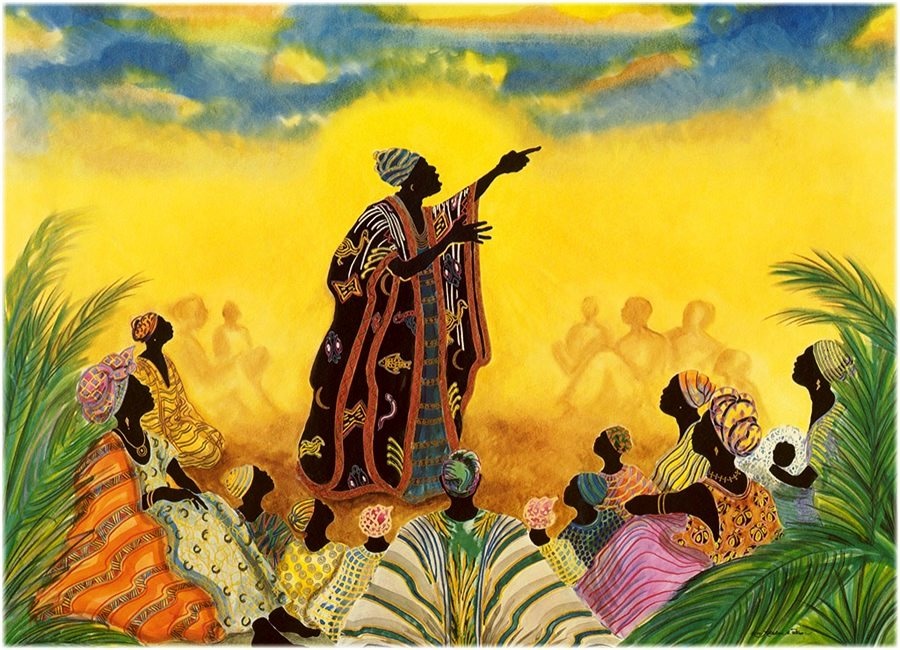
They hold a respected position acting as living archives for their people by preserving genealogies, traditions and epic stories through songs, poems a
Griots are special because music for these African people holds a larger depth than sound, melody or joy. It is all of those things but goes beyond the fun and entertainment of it; it’s a source of social identity, a framework that builds their sense of community around each other.
Female Griots are also a key backbone of Senegalese music; they perform at weddings, naming ceremonies, funerals, etc., and still exist in modern day.
Prior to their independence, Senegalese popular music was all nightclub dance bands, which they call (orchestres), and all they did was play European and American music.
As independence approached and the country sought to move away from its colonial past. The president at the time; Leopold Senghor (a key founder of the negritude movement), brought back a sense of consciousness that Griot music was just as valid and meaningful as Western classical music.
Their traditional Senegalese music began with instruments such as the xalam (a guitar-like instrument with three strings), kora (a 21-string instrument played somewhat like a harp), balafon (similar to a xylophone), the djembe, a goblet-shaped drum, said to have originated from Mali, played with hands and the sabar played with one stick and a hand.
After the independence, solo artists began to emerge; the popular music of Senegal began to be influenced by the Cuban music that was becoming popular throughout Africa but also the traditional Senegalese griot music that shaped them.
Senegal has continuously reinvented its sound while keeping percussion and oral storytelling at its core. Key strengths: rich cultural heritage (griot tradition), rhythmic complexity (sabar), and a creative industry with international resonance.
Modern Senegalese music, known as mbalax, now incorporates electronic instruments alongside these traditional ones. Senegalese musicians absorbed these foreign elements and began blending them with their local rhythms. Afro-Cuban music, in particular, struck a deep chord across West Africa. In the 1950s and 60s, Cuban son, rumba, and mambo rhythms filtered through Dakar’s nightlife, encouraging early experimentation that eventually birthed modern Senegalese genres.
By the 1970s, these elements converged to create Mbalax, Senegal’s most famous musical export. Mbalax is the sound of modern Dakar — a fusion of Wolof sabar drumming, Serer Njuup chanting, Afro-Cuban arrangements, Western pop, and global instrumentation. Pioneers such as Youssou N’Dour, Super Étoile, Baaba Maal, and Ismaël Lô refined the genre into a powerful cultural force that spread across Africa and reached international stages. It is energetic, percussive, emotional, and deeply rooted in the country’s ancient rhythms.
Today, Senegalese music continues to evolve. Dakar has become one of Africa’s strongest hip-hop hubs, producing socially conscious rappers and experimental artists who merge Mbalax with global genres like Afrobeats, electronic music, R&B, drill, and pop. Yet despite this innovation, Senegalese music retains its reliance on rhythm, community, and storytelling. Whether performed in a small village ceremony or a packed stadium in Dakar, its essence remains tied to ancestry and identity.
Youssou N’Dour one of the most popular singers in Senegal, is considered to be the pioneer of mbalax music. Other Seneglase stars like the Orchestra Baobab curated fine Afro-Cuban fusion, 1970s classicism. Baaba Maal, a Fulani singer, also blends traditional and global influences making music that can evolve and adapt to include all generations of people.The likes of Daara J / Positive Black Soul were the foundational hip-hop groups. Then we have Viviane Chidid, Wally Seck, Ismaël Lô, Thione Seck as important voices in the contemporary and classics space.
Senegalese music stands as one of the most compelling cultural legacies in West Africa, a living conversation between the past and the present. Rooted in the ancient griot tradition, enriched by the rhythms of the sabar, and shaped by the spiritual melodies of Sufi devotion, it carries centuries of memory while continuing to evolve with each generation. Its sound is never static; it moves with the people, reflecting their joys, their struggles, and their collective spirit.
From the ancestral chants to the electrifying pulse of Mbalax and the modern fusion shaping Dakar’s contemporary scene, Senegalese music remains a testament to creativity born from history. It is both heritage and innovation, a reminder that music in Senegal is not merely an art form, it is identity, storytelling, and community woven into rhythm.
And that’s Seenegal for you! A land of beautiful live music, boasting an expansive touch of genres and from Reggae to Cuban music, Hip-hop to mbalax, the music lives on.
Join us for more Global music stories and traditions, as we travel round the world!

DRIVING ARTISTES TO CENTER STAGE
A Music Management & Marketing company focused on driving music through Data, Technology, Music and Media